
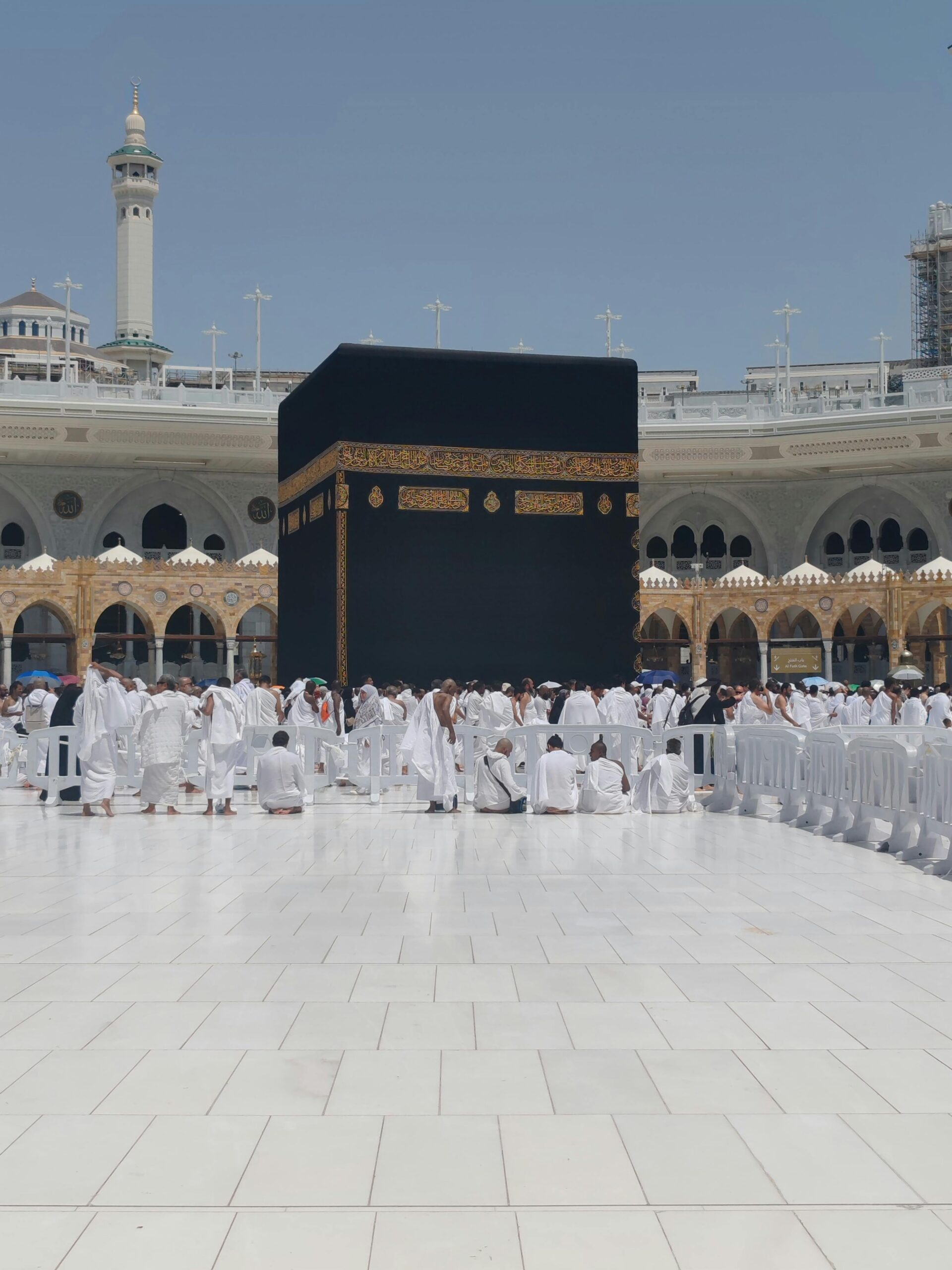
Quick Answer: UAE residents — both citizens and expats — can perform Umrah year-round (except during Hajj season). You will need a Saudi Arabia Umrah visa, a return flight to Jeddah or Madinah, accommodation near the Haram, and knowledge of the four core rituals: Ihram, Tawaf, Sa’i, and Halq or Taqsir. Budget approximately AED 3,000–8,000 per person for an economy package, or AED 10,000–25,000+ for a premium package, depending on the season and hotel category.
If you live in the UAE and have been putting off your Umrah, this guide is for you. Whether you are a UAE national, a long-term expat worker, or a family planning your first pilgrimage together, everything you need to know — from visa application to the final step of Taqsir — is covered here in plain language.
This is not a generic Umrah guide written for a global audience. Every section is written specifically for people travelling from the UAE, with costs in AED, airline options from Dubai, Abu Dhabi, and Sharjah, and practical notes that reflect the UAE experience.
What Is Umrah and Who Can Perform It?
Umrah is a voluntary Islamic pilgrimage to the holy city of Makkah (Mecca) in Saudi Arabia. Unlike Hajj — which is one of the Five Pillars of Islam and has specific dates — Umrah can be performed at almost any time of the year. It is not obligatory but is considered highly recommended (Sunnah Mu’akkadah) and carries enormous spiritual reward.
The Prophet Muhammad (peace be upon him) described Umrah as “expiation for the sins committed between it and the previous Umrah” (Sahih Bukhari and Sahih Muslim). Many scholars note that performing Umrah during Ramadan carries the reward equivalent to performing Hajj.
Any Muslim — male or female, any nationality — may perform Umrah provided they:
- Are Muslim
- Are physically capable of making the journey
- Hold a valid passport (minimum 6 months validity recommended)
- Obtain a valid Saudi Arabia Umrah visa
- For women under 45: travel with a Mahram (male guardian)
- For women 45 and older: may be able to travel in an organised group without a Mahram — this is subject to current Saudi regulations, which have evolved in recent years
UAE residents — whether citizens, GCC nationals, or expats on UAE residence visas — are all eligible to apply for an Umrah visa.
Step 1: Getting Your Umrah Visa from the UAE
The visa process is one of the first things to understand, because it determines your timeline and options.
Who Needs an Umrah Visa?
Everyone travelling to Saudi Arabia for Umrah — including UAE citizens — requires an Umrah visa. This is separate from a Saudi tourist visa. UAE citizens with valid UAE passports, and expats with valid UAE residence visas, can apply.
How to Apply: The Nusuk Platform
The primary official platform for Umrah is Nusuk (nusuk.sa), launched by the Saudi Ministry of Hajj and Umrah. Through Nusuk you can:
- Register as a pilgrim
- Apply for an Umrah permit (required to enter the Haram for Tawaf)
- Book hotel packages in Makkah and Madinah
- Book guided transport between the two cities
For the visa itself, UAE residents typically apply through a Saudi-licensed Umrah travel agency. Most agencies in the UAE handle the visa paperwork as part of the package. If you are booking independently, you can apply for a Saudi tourist/Umrah visa through the official Saudi eVisa portal or the Absher platform.
Documents Required
- Valid passport (minimum 6 months validity from date of travel)
- UAE residence visa (for expats) — must be valid
- Passport-size photograph
- Confirmed return flight ticket
- Confirmed hotel booking in Makkah (and Madinah if applicable)
- Vaccination certificate (meningitis vaccine is required; check current Saudi health requirements before travel as these can change)
- For women under 45: Mahram’s passport copy and proof of relationship (marriage certificate, birth certificate)
Disclaimer: Visa requirements, vaccination requirements, and documentation rules are subject to change. Always verify the current requirements with your travel agent or directly with the Saudi Ministry of Hajj and Umrah before applying.
Step 2: Choosing Your Umrah Package
Most UAE residents book Umrah through a travel agency as part of a package deal. This is the most straightforward approach for beginners and often the most cost-effective way to manage flights, accommodation, and visa in one place.
What a Standard Umrah Package Includes
- Return flights from your UAE city (Dubai, Abu Dhabi, Sharjah, or others)
- Umrah visa processing
- Hotel accommodation in Makkah (near Masjid al-Haram)
- Hotel accommodation in Madinah (near Masjid an-Nabawi) — for packages that include Madinah
- Airport transfers and ground transport
- Some packages include a guide or group leader for first-timers
Package Types Available from UAE
| Package Type | What You Get | Approx. Cost Per Person (AED) |
|---|---|---|
| Economy / Budget | 3-star hotels, economy flights, shared transfers | AED 3,000 – 5,500 |
| Standard / Mid-Range | 4-star hotels, economy or business class flights, private transfers | AED 5,500 – 10,000 |
| Premium / 5-Star | 5-star hotels (e.g. Fairmont, Hilton, Pullman near Haram), business/first class | AED 10,000 – 25,000+ |
Prices above are indicative estimates based on typical market rates and vary significantly by season, airline, and booking lead time. Ramadan packages cost considerably more. Always request a detailed quote from your agent.
For a detailed breakdown of costs, see our guide on how much Umrah costs from the UAE.
Airlines Flying UAE to Jeddah and Madinah
- Emirates — Daily flights from Dubai (DXB) to Jeddah (JED) and Madinah (MED)
- Etihad Airways — Flights from Abu Dhabi (AUH) to Jeddah and Madinah
- Air Arabia — Budget flights from Sharjah (SHJ) to Jeddah and Madinah — often the most affordable option
- flydubai — Budget flights from Dubai to Jeddah and Madinah
- Saudia — Flights from Dubai and Abu Dhabi
Flight time from UAE to Jeddah is approximately 2.5–3 hours. To Madinah, approximately 2.5 hours from Dubai. Most packages fly into Jeddah for Makkah-first itineraries, or into Madinah if visiting Madinah first.
Step 3: The Four Rituals of Umrah — A Clear Overview
Umrah consists of four core rituals, performed in sequence. If this is your first Umrah, understanding these before you travel is essential. A detailed step-by-step guide with duas is beyond the scope of this overview post, but here is what to expect.
1. Ihram — The State of Consecration
Before entering Makkah, every pilgrim must enter the state of Ihram. This involves:
- Performing a full ritual bath (Ghusl) and making a sincere intention (Niyyah) for Umrah
- Men: wearing two white seamless cloths — one wrapped around the waist (izar) and one draped over the shoulder (rida). No stitched clothing.
- Women: wearing modest, loose-fitting clothing that covers everything except the face and hands. Women do NOT wear a specific Ihram garment — their normal modest clothing is acceptable.
- Entering Ihram at the designated boundary point (Miqat). For travellers flying directly into Jeddah, the Miqat for most is at the airport or before it — your airline will often announce when you are approaching the Miqat boundary so you can make your intention.
- Reciting the Talbiyah: Labbayk Allahumma labbayk, labbayk la shareeka laka labbayk, innal hamda wan-ni’mata laka wal-mulk, la shareeka lak.
While in Ihram, pilgrims must avoid: cutting hair or nails, using perfume, sexual relations, hunting, arguing or fighting, and for men — covering the head.
2. Tawaf — Circling the Kaaba
Upon reaching Masjid al-Haram, pilgrims perform Tawaf: seven counter-clockwise circuits around the Kaaba, beginning and ending at the Black Stone (Hajar al-Aswad). This is performed in a state of Wudu (ritual purity).
- Start at the Black Stone (or in line with it if the crowd is too dense)
- Complete 7 circuits, keeping the Kaaba on your left
- Men traditionally perform Raml (a brisk walk) in the first three circuits
- After Tawaf: pray two Rak’ahs behind Maqam Ibrahim if possible
- Drink Zamzam water
3. Sa’i — Walking Between Safa and Marwa
Sa’i commemorates the actions of Hajar (Hagar), the wife of Ibrahim (peace be upon them), who ran between the two hills of Safa and Marwa searching for water for her infant son Ismail. This act of faith is now part of Umrah.
- Walk seven times between Safa and Marwa (Safa to Marwa = 1, Marwa to Safa = 2, and so on — ending at Marwa on the 7th)
- The distance is approximately 394 metres; total walking distance is about 2.76 km
- The covered walkway (Mas’a) inside the Haram is air-conditioned and has a separate lane for wheelchair users and those with difficulty walking
- Men should jog lightly between the two green light markers in the middle section
4. Halq or Taqsir — Cutting the Hair
After completing Sa’i, the pilgrim exits the state of Ihram by:
- Men: Shaving the head completely (Halq) — this is preferred — or cutting the hair significantly all around (Taqsir)
- Women: Cutting a small amount from the tips of their hair — approximately a fingertip’s length — from all around. Shaving is not done for women.
With this step, Umrah is complete and the state of Ihram ends. The restrictions of Ihram are lifted.
For a full step-by-step walkthrough with specific duas for each ritual, see our detailed guide on how to perform Umrah step by step.
Step 4: Visiting Madinah
Most Umrah packages from the UAE include a visit to Madinah al-Munawwarah, the city of the Prophet Muhammad (peace be upon him). Visiting Madinah is not a ritual of Umrah — it is not obligatory — but it is a deeply significant spiritual experience and most pilgrims consider it an inseparable part of the journey.
The primary destination in Madinah is Masjid an-Nabawi (the Prophet’s Mosque), which houses the blessed burial chamber of the Prophet (peace be upon him). Visiting and offering Salah in Masjid an-Nabawi carries a reward 1,000 times greater than prayer in any other mosque except Masjid al-Haram (Sahih Muslim).
Other important sites in Madinah include Masjid Quba (the first mosque built in Islam), Masjid al-Qiblatayn, Jannat al-Baqi cemetery, and the sites of the Battle of Uhud. Most group tours include visits to these sites.
Travel Between Makkah and Madinah
The Haramain High-Speed Railway (also called the Haramain Train) connects Makkah, Jeddah, and Madinah. The journey from Makkah to Madinah takes approximately 2 hours. This is a comfortable, modern service and a significantly better experience than the old road journey. Book tickets through the official Haramain website or through the Nusuk app.
Step 5: The Best Time to Go — Seasons Compared
| Season | Dates (approx.) | Crowds | Cost | UAE Pilgrim Notes |
|---|---|---|---|---|
| Ramadan | 9th Islamic month | Extremely high | Highest (2–3x normal) | Maximum spiritual reward; book 6+ months ahead |
| Dhul Hijjah (non-Hajj days) | 12th Islamic month | Very high | High | Avoid Hajj days 8–13 Dhul Hijjah unless performing Hajj |
| Winter (Nov–Feb) | Nov–Feb Gregorian | Moderate | Moderate | Best balance of comfort, cost, and manageable crowds for UAE residents |
| Summer (Jun–Sep) | Jun–Sep Gregorian | Lower | Lower (off-peak) | Extremely hot in Makkah (40–45°C); budget travellers accept the heat for lower cost |
| School holidays UAE | Various | Higher than usual | Slightly elevated | Families often travel during UAE school breaks; book early |
For most first-time pilgrims travelling from the UAE, the winter months (November to February) offer the best combination of manageable crowds, reasonable temperatures, and competitive package prices.
Step 6: What to Pack for Umrah from UAE
Packing for Umrah requires some specific preparation beyond a typical holiday.
Essential Items for Men
- 2 sets of Ihram cloth (seamless white fabric — available in UAE Islamic shops and online)
- Ihram belt (to hold the lower cloth)
- Unstitched sandals (Ihram-friendly)
- Modest clothing for Madinah (Ihram not required there)
- Unscented soap, shampoo, and toiletries (no perfume while in Ihram)
- Small backpack or waist bag for inside the Haram
Essential Items for Women
- Several sets of loose, modest clothing (abaya or loose sets — no need for white)
- Comfortable, lightweight hijab scarves
- Comfortable flat shoes — you will walk several kilometres each day
- Unscented toiletries while in Ihram
- Small crossbody bag for documents and essentials inside the Haram
For Everyone
- Passport and visa documents (physical copies, not only digital)
- Meningitis vaccination certificate (required)
- Travel insurance documents
- Saudi riyals for small expenses (ATMs available; some UAE debit cards work in Saudi Arabia)
- Small Umrah dua booklet or the Nusuk app for guidance
- Comfortable walking shoes (in addition to Ihram sandals)
- Medication and any personal prescriptions (bring enough for your full trip plus extra)
For a complete, printable packing list, see our detailed post on the complete Umrah packing list for UAE pilgrims.
Step 7: Booking Your Umrah — A Checklist for UAE Residents
Follow this sequence when booking your Umrah from the UAE:
- Check your passport validity — minimum 6 months from your travel date
- Get your meningitis vaccination — required; get the certificate in advance
- Decide on dates — factor in work, school, and budget for your preferred season
- Choose your departure city — Dubai, Abu Dhabi, or Sharjah (affects airline and price options)
- Contact 2–3 licensed Umrah agencies in the UAE — compare packages honestly
- Confirm what is included — flights, visa, hotel, transfers, guide (if any)
- Book early for Ramadan — Ramadan packages from UAE sell out 4–6 months in advance
- Register on Nusuk (nusuk.sa) — your permit to enter the Haram for Tawaf is now managed through this platform
- Prepare your Ihram clothing and packing — allow at least 2 weeks before travel
- Learn the duas and steps of Umrah — even a basic familiarity makes the experience far more meaningful
What to Expect: A Realistic Day-by-Day Overview
A typical 7-day Umrah trip from the UAE looks like this for most package travellers:
- Day 1: Fly from UAE to Madinah (or Jeddah). Check in to hotel. Rest.
- Day 2–3: If arriving via Madinah — visit Masjid an-Nabawi, offer Salah, visit key sites.
- Day 3–4: Travel from Madinah to Makkah (by Haramain train or coach). Enter Ihram at Miqat. Perform Umrah (Tawaf + Sa’i + Halq/Taqsir).
- Day 4–6: Time for additional Tawaf (nafl/voluntary), visiting Masjid al-Haram, personal worship and du’a, rest between prayers.
- Day 7: Transfer to Jeddah airport. Fly back to UAE.
Shorter packages (4–5 days) are available but most experienced pilgrims advise a minimum of 7 days to avoid rushing the spiritual experience.
Common Questions from UAE Pilgrims
Based on what UAE residents most commonly ask before their first Umrah:
Can I perform Umrah on a Saudi tourist visa?
As of recent Saudi policy updates, holders of a Saudi tourist visa may perform Umrah during their visit — they no longer require a separate Umrah visa in all cases. However, Saudi policy on this has changed several times. Verify the current rules with your travel agent or at the Saudi consulate before assuming this applies to your situation.
Can expats in the UAE with any nationality perform Umrah?
Yes. Expats of all nationalities living in the UAE can apply for Umrah visas through UAE-based travel agencies, provided they hold a valid UAE residence visa. The Umrah visa is separate from your work/residency visa and does not affect it.
Is it safe to travel alone for Umrah from UAE?
Yes, Makkah and Madinah are among the safest cities in the world for pilgrims. However, for first-time pilgrims — especially solo travellers — a group or guided package is strongly recommended. You will have support on arrival, transport, and guidance through the rituals. Solo travel is entirely possible for experienced pilgrims who know the rituals and logistics.
Final Thoughts: Starting Your Umrah Journey from the UAE
For UAE residents, performing Umrah is one of the most accessible pilgrimages in the world. With direct flights from Dubai, Abu Dhabi, and Sharjah, an efficient Saudi visa process, and dozens of licensed agencies offering UAE-specific packages, the logistics have never been easier to navigate.
The most important preparation is not logistical — it is spiritual. Learn the steps, understand the meaning behind each ritual, and approach the journey with sincerity of intention. The physical journey takes a few days; the impact can last a lifetime.
Use this site as your starting point. Explore the detailed guides linked throughout this post, compare your package options, and when you are ready — book with a licensed, reputable agency and begin your journey with confidence.
May Allah accept your Umrah and grant you a blessed journey. Ameen.
FAQs
How long does Umrah take from the UAE?
A typical Umrah trip from the UAE lasts between 5 and 10 days. Budget packages are often 5–7 nights. Most experienced pilgrims recommend a minimum of 7 days to avoid rushing. The Umrah rituals themselves — Ihram, Tawaf, Sa’i, and Halq or Taqsir — take approximately 3–5 hours to complete, but most pilgrims spend additional days for personal worship, visiting Madinah, and returning to the Haram for voluntary Tawaf.
Do UAE expats need a separate Umrah visa?
UAE expats can apply for an Umrah visa while residing in the UAE, provided their UAE residence visa is valid. Most UAE-based Umrah travel agencies handle the visa application as part of the package. Saudi Arabia has also introduced the option for tourist visa holders to perform Umrah in some circumstances — however, this policy has changed over time, so verify the current rules with your agent before assuming it applies to your situation.
What is the cheapest month to perform Umrah from UAE?
The most affordable months for Umrah from the UAE are typically June, July, and August (summer). Package prices drop significantly in the off-season due to lower demand. The trade-off is the heat in Makkah, which can exceed 40–45 degrees Celsius. For those who can tolerate the heat, summer offers the best value. The most affordable non-summer months are October and November, after Hajj season ends and before the Ramadan premium begins.
Is it compulsory to book Umrah through a travel agency in the UAE?
It is not legally compulsory to use a travel agency, but it is the most practical approach for most UAE residents — especially first-timers. Agencies handle the visa application, flights, hotel, and transfers in one package. Independent booking is possible: you can apply for a Saudi eVisa, book your own flights and hotel, and register on the Nusuk platform yourself. However, the group agency route is recommended for first-time pilgrims because it provides guidance and support throughout the journey.
Can a woman perform Umrah without a Mahram from the UAE?
Traditionally, women are required to travel with a Mahram (a male guardian — husband, father, brother, or son). Saudi Arabia has updated its policies in recent years to allow women aged 45 and older to travel with organised Umrah groups without a Mahram. Women under 45 generally still require a Mahram. These rules can change, and there are ongoing scholarly discussions on this matter. Check with a knowledgeable Islamic scholar and verify the latest Saudi Ministry of Hajj and Umrah policy before making plans.
What vaccinations are required for Umrah from the UAE?
The meningitis (ACYW135) vaccine is required for all Umrah pilgrims and must be taken at least 10 days before travel. Saudi Arabia may also require or recommend additional vaccines depending on current global health conditions — COVID-19 requirements, for example, were in place in recent years and may vary. Check the current health entry requirements on the Saudi Ministry of Health website or through your UAE travel agent before applying for your visa.
What is the Nusuk app and do I need it for Umrah?
Nusuk (available at nusuk.sa and as a mobile app) is the official platform of the Saudi Ministry of Hajj and Umrah. It is used to register as a pilgrim, obtain Umrah permits — which are required to perform Tawaf inside Masjid al-Haram — and book hotels and transport. If you are booking independently, you will need a Nusuk account. If you are booking through a UAE travel agency, they will often handle the Nusuk registration and permit booking on your behalf, but it is worth creating your own account regardless for access to permits and scheduling.
Disclaimer: Prices, visa requirements, vaccination requirements, and Saudi Ministry of Hajj and Umrah regulations are subject to change. All information on this page was accurate at the time of publication. Always verify current requirements with your travel agent or directly with official Saudi government sources before booking.